
How to Ferment Any Vegetable
From The Kitchen · a prep-ahead staple
Fermenting is far simpler than it sounds. Salt, water, and time do nearly all the work, you are only setting the conditions and letting the good bacteria take it from there. Once you understand the brine, the rest is variation.
Scaled from the original recipe, sizing up or down is proportional, so taste and adjust the salt, acid & spice.
Ingredients
- Vegetables of your choice (carrots, cabbage, cucumbers, cauliflower)
- Filtered, non-chlorinated water
- Fine sea salt (non-iodized)
- Aromatics: garlic, dill, ginger, peppercorns (optional)
Method
- Start scrupulously clean, clean jar, clean hands, clean utensils.
- Make a 2% brine: dissolve 1 tablespoon fine sea salt in 2 cups (500 ml) filtered water.
- Pack the vegetables tightly into the jar with any aromatics.
- Pour the brine over to cover completely, then weight the vegetables so they stay fully submerged.
- Cover loosely so gases can escape, and keep at cool room temperature, out of direct sun, 3–10 days.
- Taste from day three; when it is pleasantly tangy, seal it and move it to the refrigerator, where the cold slows fermentation to a crawl.
Storage: Keeps 2 to 3 months in the refrigerator; the flavor deepens as it sits.
Gina's tip
Everything below the brine, nothing above it, any vegetable that peeks above the surface is where mold begins. A small glass weight, or a folded cabbage leaf tucked on top, keeps them under. Use non-chlorinated water; chlorine can stall the ferment.
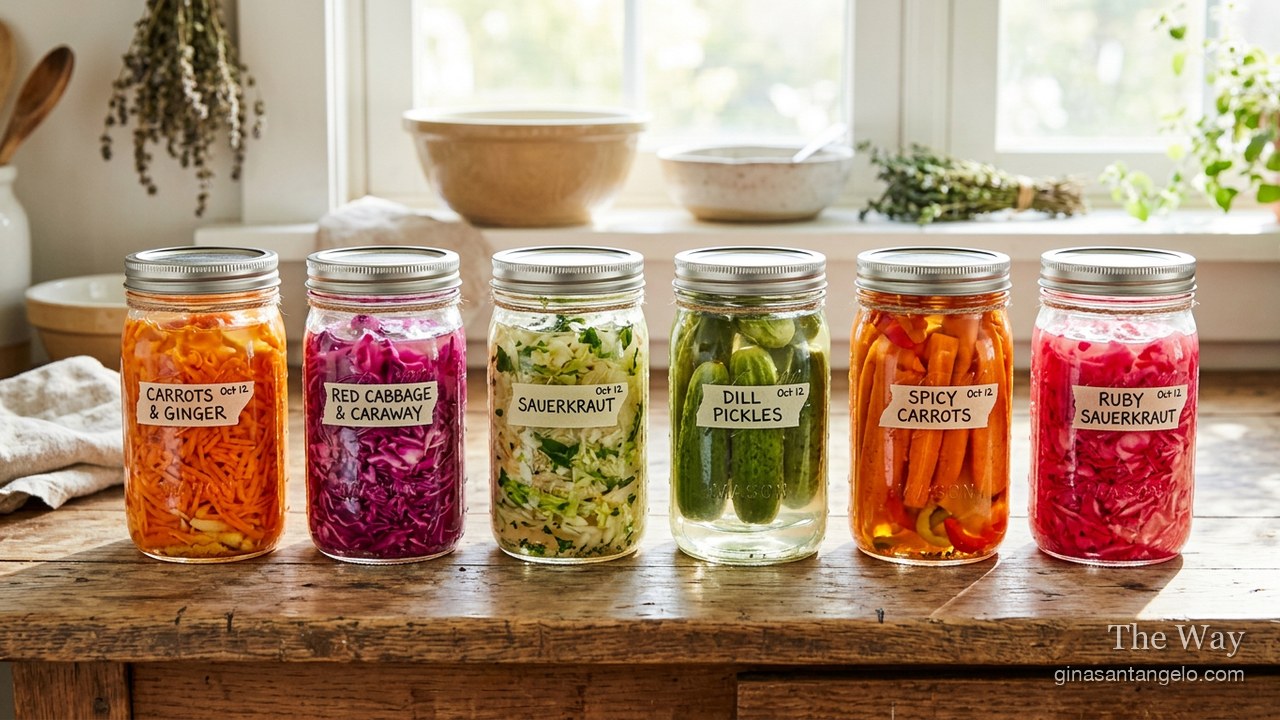
There is something quietly satisfying about a row of jars doing their slow work on the counter. Nothing to do but wait, the oldest kind of cooking there is.
I hope this recipe finds a place in your kitchen as it has in mine. Enjoy!
Gina